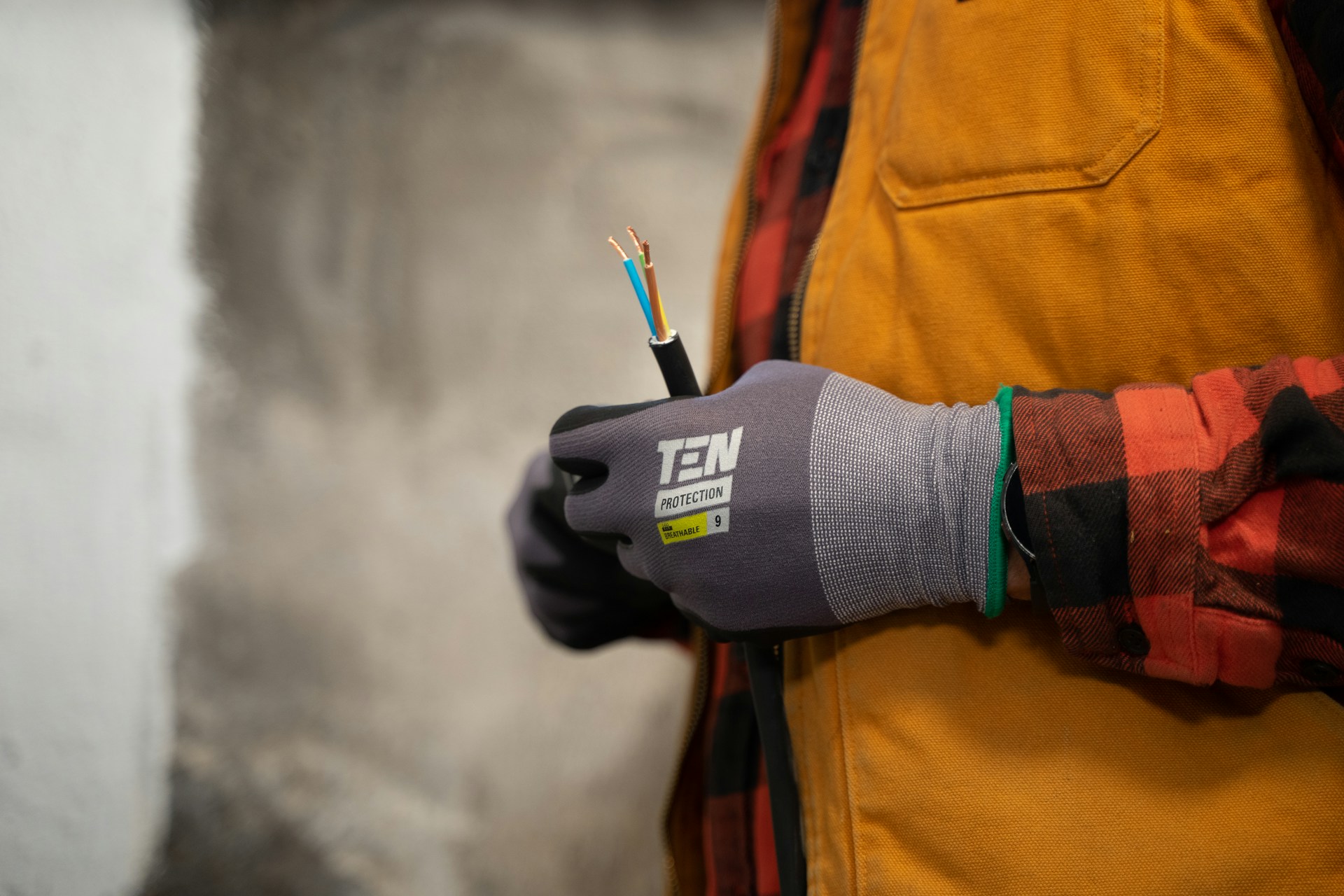
If you are planning a heated garage or a workshop on an acreage near Clairmont or a lot off 100th Avenue the first thing to know is that the work is treated as a separate structure under the Canadian Electrical Code. That means a dedicated feeder from your main panel, a properly sized subpanel in the garage, and a permit from the local Safety Codes authority before you energize anything.
What size feeder do I need for a detached garage?
Most residential detached garages in the Peace Country run a 60 amp subpanel fed with 4 AWG copper THHN in PVC conduit. If you anticipate a welder, a 240 V compressor, an electric heater, or an EV charger you may want to step up to a 100 amp feeder using 2 AWG copper. The feeder size is dictated by the calculated load in the subpanel not by the distance alone. A typical 30 ft run from a house on Mountview to a shop on the bypass stays well within voltage‑drop limits for 4 AWG at 60 amps. Longer runs to acreages past the Costco area may push you to the larger conductor.
How deep does the trench have to be?
The CEC requires a minimum burial depth of 18 in for PVC conduit when the circuit is 60 amps or less and 24 in for larger feeders. In practice we trench 24 in everywhere around Grande Prairie because the frost line can hit 48 in in January. Use Schedule 40 PVC for the feeder and schedule 80 for any conduit that will be under a driveway or a gravel pad. Backfill with sand for the first six inches then native soil. Mark the trench with warning tape before you backfill.
What circuits should I plan for a heated shop?
A functional shop usually needs the following dedicated circuits:
- 240 V 30 amp for a welder or plasma cutter
- 240 V 20 amp for a compressor
- 120 V 20 amp GFCI for bench outlets
- 240 V 40 amp for an electric unit heater or infrared heater
- 240 V 50 amp for a future EV charger (run a spare conduit now)
- 120 V 15 amp lighting circuit (LED fixtures keep the load low)
All receptacle circuits in a garage must be GFCI protected per CEC 26‑704. If you are adding a small office or a bathroom in the shop you will need an additional AFCI protected circuit for the receptacle serving that space.
How does the permit process work in Grande Prairie?
Every new feeder, subpanel, and branch circuit in a detached structure requires an electrical permit from the City of Grande Prairie Safety Codes office or the County of Grande Prairie if you are outside city limits. The steps are:
- Submit a single‑line diagram showing feeder size, subpanel rating, and all branch circuits.
- Pay the permit fee (typically $150‑$250 for a residential garage).
- Schedule a rough‑in inspection after conduit and conductors are in place but before backfill.
- Schedule a final inspection after the subpanel is terminated and all devices are installed.
- Receive the Certificate of Inspection – keep it for insurance and resale.
The Safety Codes Act (Alberta) gives the authority to the local administrator. You can start the application online at the Alberta Safety Codes portal. If you are unsure whether a permit is needed call the office – they would rather answer a question than issue a stop‑work order.
Grounding and bonding rules for a separate structure
A detached garage must have its own grounding electrode system. The most common approach in Peace Country acreages is a ground rod driven 8 ft into the soil at the garage and a #6 AWG copper bonding jumper from the subpanel grounding bar to the rod. The feeder equipment grounding conductor runs back to the main panel and ties into the main grounding bar. Do not rely on the concrete slab or a water pipe for the electrode – the code requires a listed electrode. If the garage has a metal roof or steel framing bond those parts to the subpanel grounding bar as well.
Quick cost checklist and when to call a pro
| Item | Typical range (CAD) |
|---|---|
| 60 amp feeder (4 AWG copper, 30 ft) | $300‑$500 |
| 100 amp feeder (2 AWG copper, 30 ft) | $600‑$900 |
| PVC conduit and fittings (30 ft) | $120‑$200 |
| Subpanel (60 amp, 12‑space) | $150‑$250 |
| Subpanel (100 amp, 24‑space) | $250‑$400 |
| Trenching and backfill (labour) | $500‑$1 200 |
| Permit fee | $150‑$250 |
| Inspection fees (incl. rough‑in & final) | $100‑$200 |
These numbers are ballpark figures for a standard residential lot near 100th Street. Acreage runs, rock, or a long conduit run under a driveway can push the total higher. If you are comfortable pulling wire and terminating a panel you can save on labour, but the permit and inspections are mandatory. For anything beyond a simple 60 amp feeder – especially if you are adding a 240 V heater, a welder, or an EV charger – it is wise to bring in a licensed electrician who knows the local inspection schedule. GP Electric handles the design, permit paperwork, and final inspection for projects across the County of Grande Prairie, Clairmont, Sexsmith, Wembley, Beaverlodge, and Hythe. Reach out through our contact page for a site‑specific quote.
If you are also upgrading the main service to handle the new feeder you may want to look at a panel upgrade at the same time. Our residential electrical team can coordinate the whole job from trench to final tag.
Frequently Asked Questions
Do I need a permit for a 60 amp subpanel in a detached garage in Grande Prairie?
Yes. Any new feeder and subpanel installation in a separate structure requires an electrical permit from the City or County Safety Codes office before work begins.
What burial depth is required for PVC conduit feeding a garage in the Peace Country?
The code minimum is 18 in for 60 amp feeders, but we trench 24 in everywhere around Grande Prairie because the frost line can reach 48 in in winter.
Can I use the existing house ground rod for the garage subpanel?
No. The detached garage must have its own grounding electrode – typically an 8 ft ground rod at the garage bonded to the subpanel grounding bar.
What size feeder should I run if I plan to add an EV charger later?
Run a 100 amp feeder with 2 AWG copper and install a spare 1‑in conduit now. That gives you capacity for a 50 amp EV circuit without re‑trenching.
Are GFCI breakers required for all garage receptacles?
Yes. CEC 26‑704 mandates GFCI protection for every 120 V receptacle in a garage or shop.
How long does the inspection process take in the County of Grande Prairie?
Rough‑in inspections are usually scheduled within 3‑5 business days after the permit is issued. Final inspection follows once the subpanel is terminated and all devices are installed.